NASA-UAP-VM006
UnresolvedThe Apollo 17 “three dots” (1972)
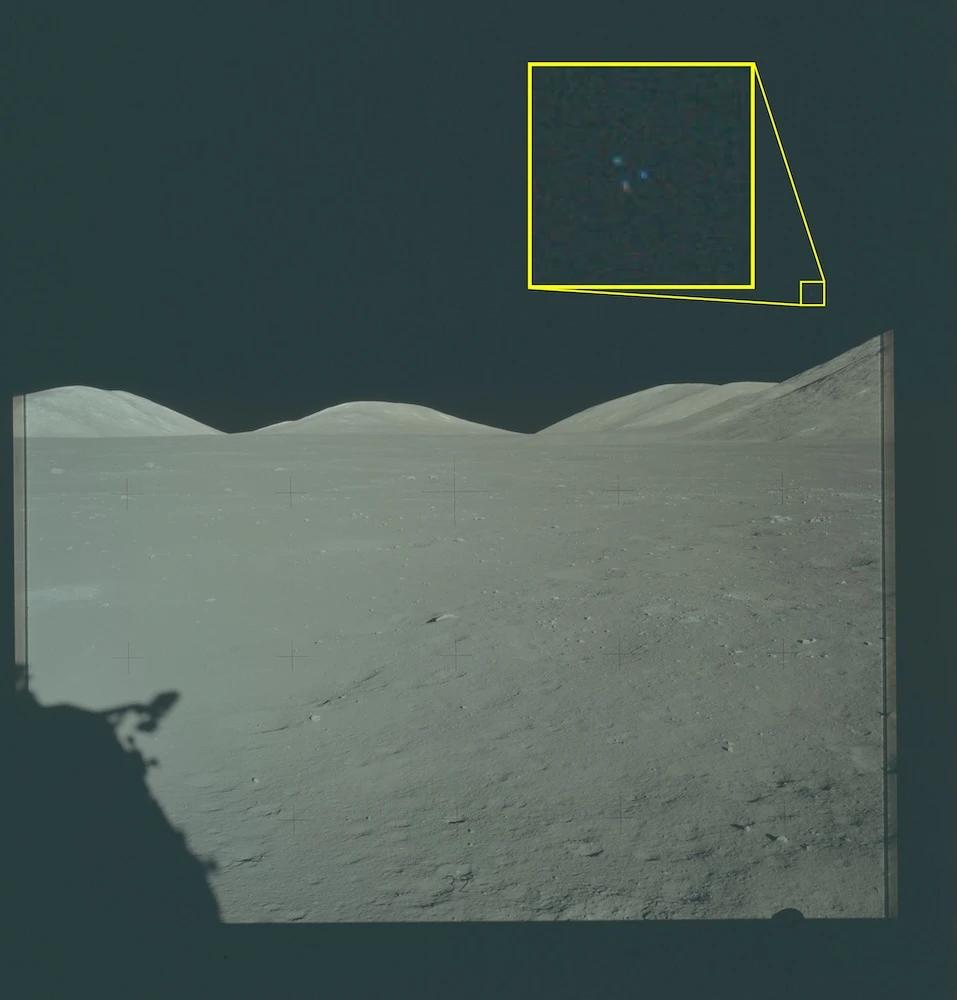
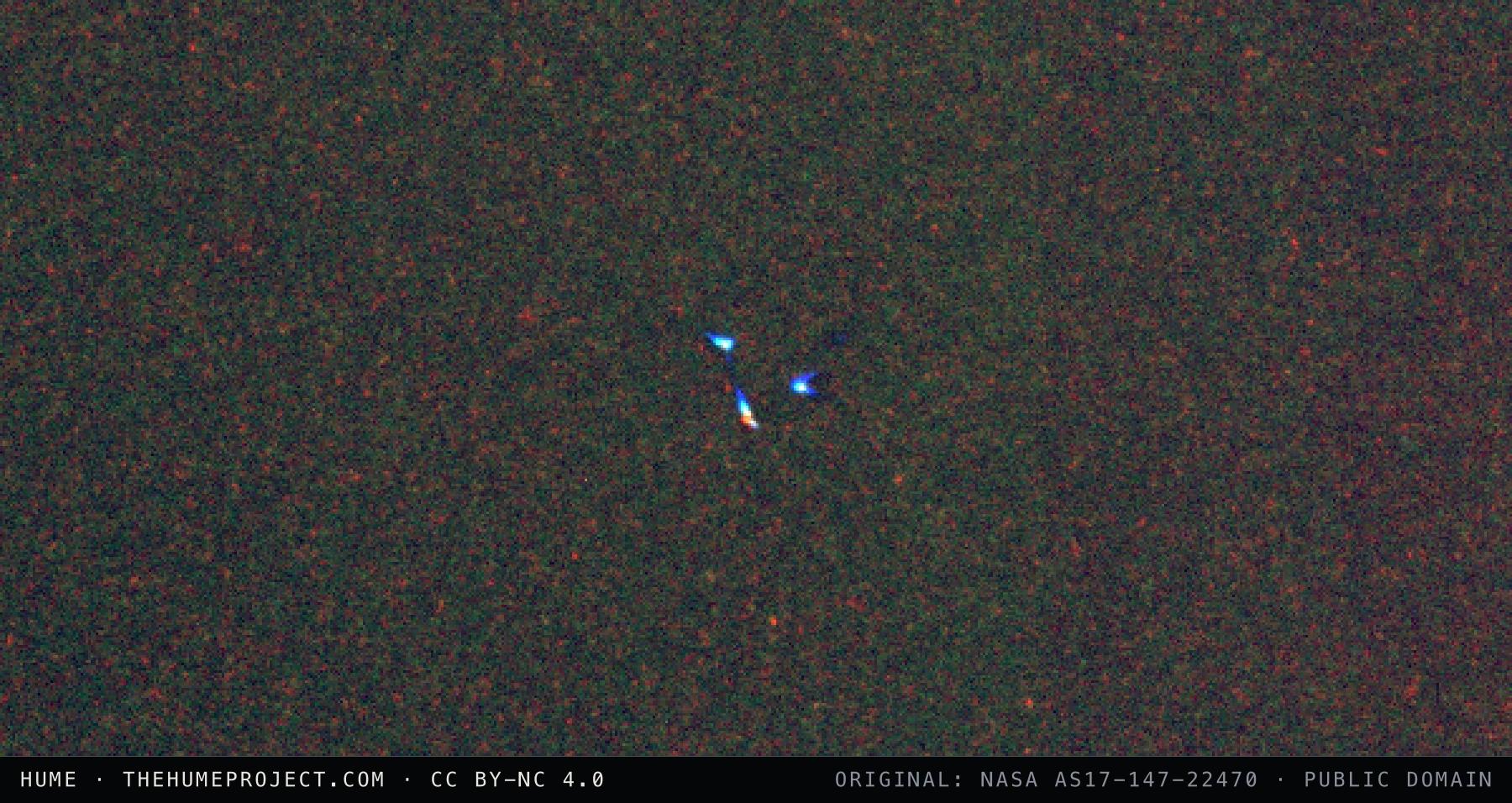
An Apollo 17 photo taken out of the lunar module window shows, magnified, three “dots” in a triangle above the horizon. The catalogue does not say which frame it is: it is NASA's AS17-147-22470, and the dots were already in its scans. In the raw scan they are three tiny marks, each a different shape, almost only blue and sharper than the focused mountains; in the next photo the same patch of sky is empty. It fits something on the film itself better than an object in the lunar sky.
- Date
- Dec 11, 1972
- Location
- The Moon: the Taurus-Littrow valley, from the lunar module window, looking westOff Earth: it does not appear on the globe.
- Platform
- From the lunar surface · Jack Schmitt, out of his lunar module window, about two hours after landing and before the first moonwalk [2][3]
- Sensor
- Hasselblad 500EL camera with a Zeiss Biogon 60 mm lens and Kodak Ektachrome SO-368 colour film (magazine 147) · frame AS17-147-22470 [4][2]
- Official status
- Unresolved · the DoW has opened a case: a preliminary analysis suggests it is “potentially” a physical object in the scene, and the full NASA and DoW analysis, with the original film, has not been released [1][5]What each status means →
01 Sensor readout
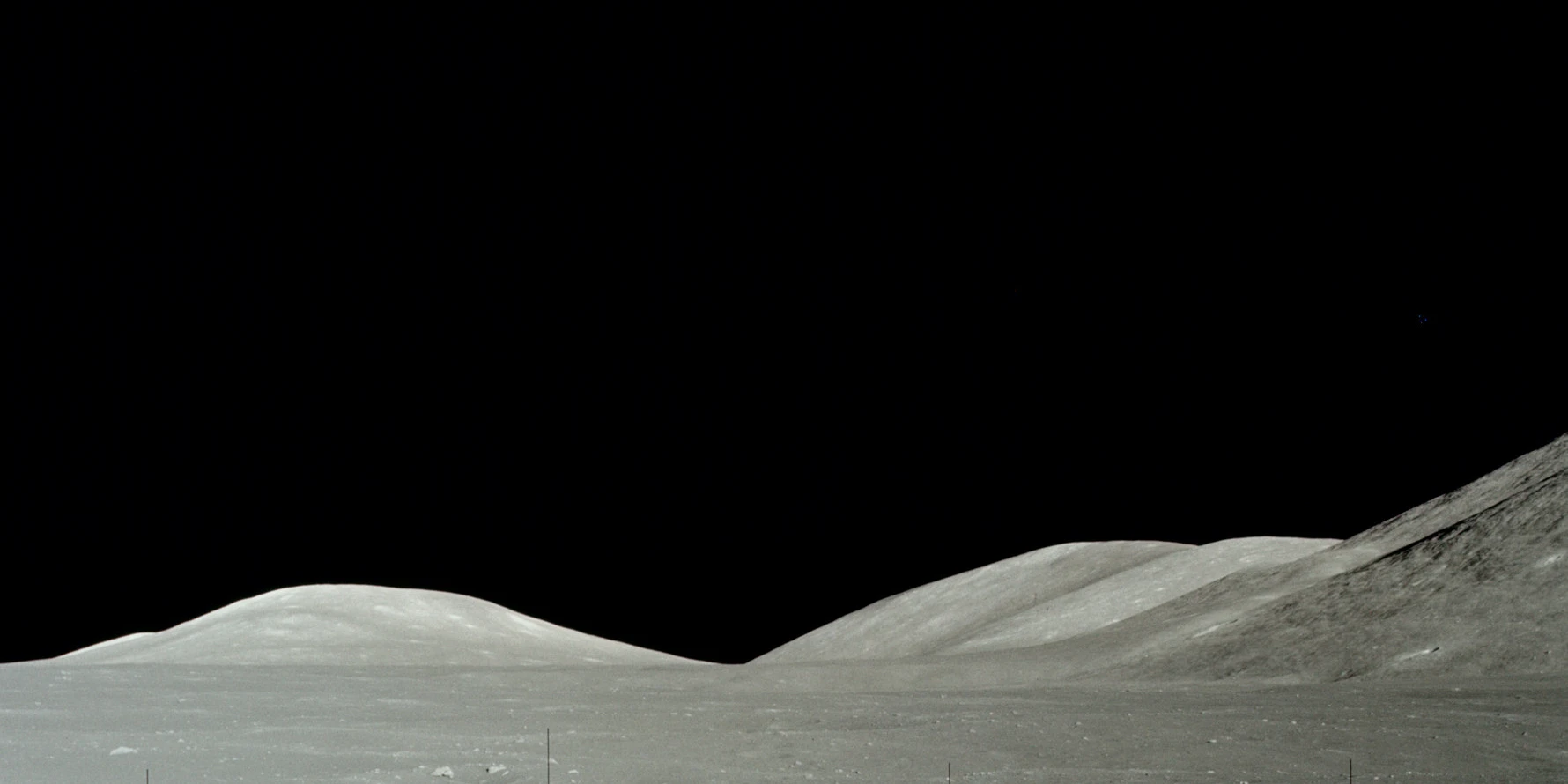
- 1∴The “three dots”
- 2▲(Old) Family Mountain
AS17-147-22470, NASA's photo, without the PURSUE sheet. The “three dots” are in the sky, upper right: at this scale they barely show, because together they span under 12 pixels in a 2,350-pixel frame.
Frame · NASA · Harrison Schmitt (Apollo 17) / Apollo Lunar Surface Journal · Public domain
Image record
- Author
- NASA · Harrison Schmitt (Apollo 17)
- Origin
- Apollo Lunar Surface Journal
- Original file
- AS17-147-22470HR.jpg ↗
- License
- U.S. Government work: no U.S. copyright (17 U.S.C. § 105)
- Retrieved
- 2026-10-19
- Video SHA-256
- 4c3d934112f8fb6e1cb021559a59e41240fa4b12ad2d67970cd4cf37e49a6a7f
The appearance of U.S. Department of War (DoW) visual information does not imply or constitute DoW endorsement.
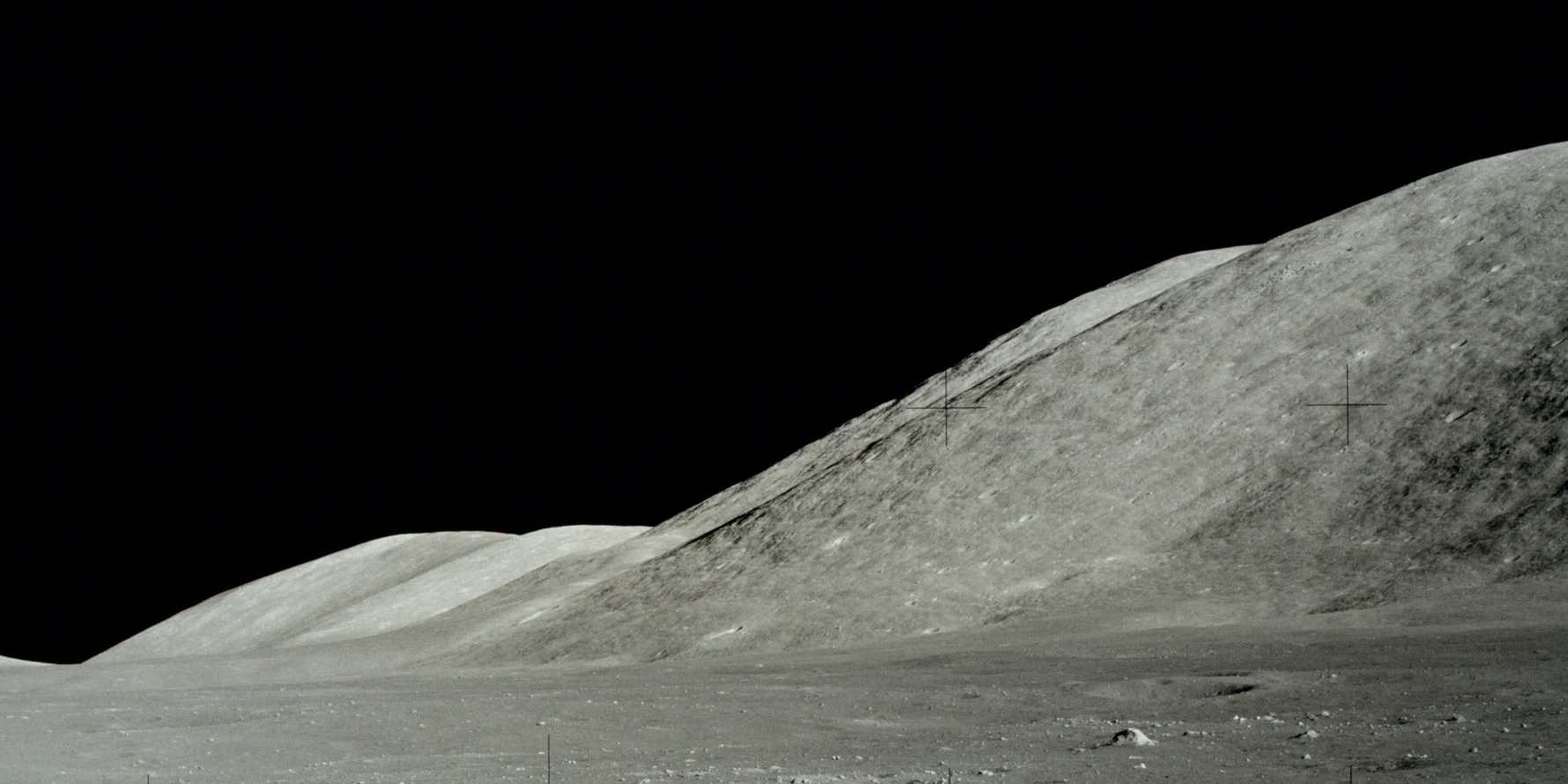
- 1○Where the dots were: empty
AS17-147-22471, the next photo, from the same window. Aligning the landscape, the patch of sky where the three dots were falls here, and it is empty: a distant, almost still object would still be there.
Frame · NASA · Harrison Schmitt (Apollo 17) / Apollo Lunar Surface Journal · Public domain
Image record
- Author
- NASA · Harrison Schmitt (Apollo 17)
- Origin
- Apollo Lunar Surface Journal
- Original file
- AS17-147-22471HR.jpg ↗
- License
- U.S. Government work: no U.S. copyright (17 U.S.C. § 105)
- Retrieved
- 2026-10-19
- Video SHA-256
- 7f5a8e7bfd865c19440654b5a463a9b94ee42973a01996d6e7577b700404e2bb
The appearance of U.S. Department of War (DoW) visual information does not imply or constitute DoW endorsement.
The full video arrives in V2. Meanwhile, the official frames.
02 Images from the file
Only images from the records themselves: official pages, charts and photos, and drawings the witnesses handed in. Artist's recreations and AI-generated images are not shown, even when the catalogue includes them. Which images are published
03 Timeline
About two hours after Apollo 17 lands, Jack Schmitt photographs the horizon out of his lunar module window: AS17-147-22469 to 22478, one sequence. [3][2]
PURSUE releases the photo in its first batch, with a callout magnifying the dots, and says the DoW has opened a case and obtained the original film. [1][5]
04 Hypotheses
Status as stated by the official sources cited. The archive takes no side. What each verdict means
- Not assessed
Something on the film itself: a defect, dust or a mark in the emulsion or the scan
No official source assesses it; it is HUME's measurement. In the raw scan the three marks have different shapes, almost all their signal in the blue channel and edges about 2 pixels wide, against a median of 6.6 for the focused horizon: they are sharper than anything the lens focused. They appear in one frame only, and loose coloured specks show in the sky of other photos from the same magazine, one at the same spot on the film in two consecutive photos. [4][2]
- Pending
A physical object in the scene
It is what the DoW's preliminary analysis suggests, which has not been released; the full one, with the original film, is still pending. What was measured does not support it: a distant focused light would give three equal round spots the size of the lens blur, and it would show in the next photo too, where that patch of sky is empty; a nearby object, such as a speck on the window, would come out badly out of focus. [1][4][2]
05 Editor's reading
The editor's opinion, not an official finding. It rests on the records cited and changes if they do. What each level means
- Conventional explanation likely
- Open
- Anomalous
- The “three dots” are in NASA's scans of AS17-147-22470, and at film scale they are three different marks, almost only blue and sharper than the focused horizon: the signature of something on the film itself, not of an object in the lunar sky. [4][2]
- They do not appear in the next photo of the same series, where the same patch of sky is empty, and similar specks show up loose in other photos from the same magazine. [2]
- One important caveat remains: the DoW says its preliminary analysis points to a possible physical object and that it will release the full one, made with the original film. HUME will revisit this reading when it comes out. [1]
— Isaac Chaves, editor · Reading of
06 Discrepancies between sources
- The catalogue says neither which photo it is nor the day (“1972”): it is AS17-147-22470, taken on December 11, 1972 out of the lunar module window. [1][2]
- The colours: the PURSUE sheet shows two bluish points and one reddish; in the raw scan all three marks are almost only blue, and the third has a reddish tail. [1][4]
07 The case in PURSUE
How PURSUE publishes this case: its official description and every record, with links to the files. Reproduced as is, catalogue errors included.
Official description
As part of the review of historical UAP materials under PURSUE, DOW has opened a case to investigate the accompanying NASA photograph from the Apollo 17 mission, taken December 1972. The image contains three “dots” in a triangular formation in the lower right quadrant of the lunar sky that is clearly visible upon magnification of the image. While this photo has been previously released and discussed by keen observers, there is no consensus about the nature of the anomaly. New preliminary US government analysis suggests the image feature is potentially the result of a physical object in the scene. Additionally, as part of this investigation, the government has obtained the original film from the Apollo 17 mission and the results of the full NASA and DOW analysis will be released when completed.
Catalogue records · 1
NASA-UAP-VM006 · Image · NASA · May 8, 2026
Apollo 17, 1972
1972 · Moon
08 Sources
- [1]
Record · U.S. Department of War · PURSUE (NASA) · May 8, 2026
NASA-UAP-VM006 · Apollo 17, 1972 (photograph with a PURSUE callout)
A sheet with an Apollo 17 photo (December 1972) and a yellow callout magnifying three “dots” in a triangle above the horizon. The DoW says it has opened a case: a preliminary analysis suggests it could be a physical object in the scene, it has obtained the original film and it will release the full analysis with NASA when done. It gives no frame number.
Checked on Oct 19, 2026 · Open the original ↗
- [2]
Record · Apollo Lunar Surface Journal · linked from NASA History
Apollo 17 Image Library (Apollo Lunar Surface Journal)
Catalogue of the Apollo 17 photos with NASA scans. AS17-147-22470 is one of the views taken out of the lunar module window before the first moonwalk: “(West) Family Mountain (left), (Old) Family Mountain (center), Scarp”; 22471 is the next in the same series.
Checked on Oct 19, 2026 · Open the original ↗
- [3]
Record · Apollo Lunar Surface Journal · linked from NASA History
Apollo 17 Lunar Surface Journal: Post-landing Activities
Annotated transcript of the hours after landing: the photos out of Jack Schmitt's window (AS17-147-22469 to 22478) are one horizon sequence, taken before those out of Gene Cernan's window; it gives no time for each frame.
Checked on Oct 19, 2026 · Open the original ↗
- [4]
Record · Arizona State University · March to the Moon (Apollo Digital Image Archive)
AS17-147-22470 (raw scan, Apollo Digital Image Archive)
A 16-bit raw scan (14,160 × 16,020 px) of the original frame. Record: magazine 147, Hasselblad 500EL Data Camera, Zeiss Biogon 60 mm f/5.6 lens and Kodak Ektachrome SO-368 colour reversal film.
Checked on Oct 19, 2026 · Open the original ↗
- [5]
Record · U.S. Department of War
Presidential Unsealing and Reporting System for UAP Encounters (PURSUE)
Department of War program, supported by ODNI, that releases declassified records of unresolved UAP cases from several agencies in tranches. None of the three Navy videos is in it.
Checked on Oct 4, 2026 · Open the original ↗
09 How to cite
You may reuse this analysis by crediting HUME with a link to this page. The official documents are public domain. License and reuse
HUME. “The Apollo 17 “three dots” (1972) · NASA-UAP-VM006”. Published Oct 19, 2026. http://localhost:3000/en/sensor-room/nasa-uap-vm006 · CC BY-NC 4.0.
May contain errors by the AI and the editor · always check the official source. · Method · Privacy · License